Become the Calm, Confident Parent Your Child Needs Mid-Meltdown.
The Tantrum Taming Masterclass
Learn the repeatable approach that shows you how to stay, de-escalate, and set limits that stick mid-tantrum, so you can parent with clarity instead of reacting in survival mode.

Dinner is nearly on the table. Your 3 year old is still on the iPad. You say five more minutes. Five minutes later, you say it's time. He says no.
You try the calm voice. You try the stern voice. You try a bribe, then an apology, then the counting to three. He ends up on the floor. Dinner goes cold.
This is not you being a bad parent. This is you running a high-capacity tool in a low-capacity moment. The script you were given does not fit the moment it's being asked to handle.
One of the most followed voices in toddler and preschooler parenting.
For a reason.
Darius works with parents of toddlers and preschoolers on tantrums, defiance, and emotional regulation. His work draws on developmental psychology, attachment theory, and neuroscience. The posts on the right are all from the last six weeks.
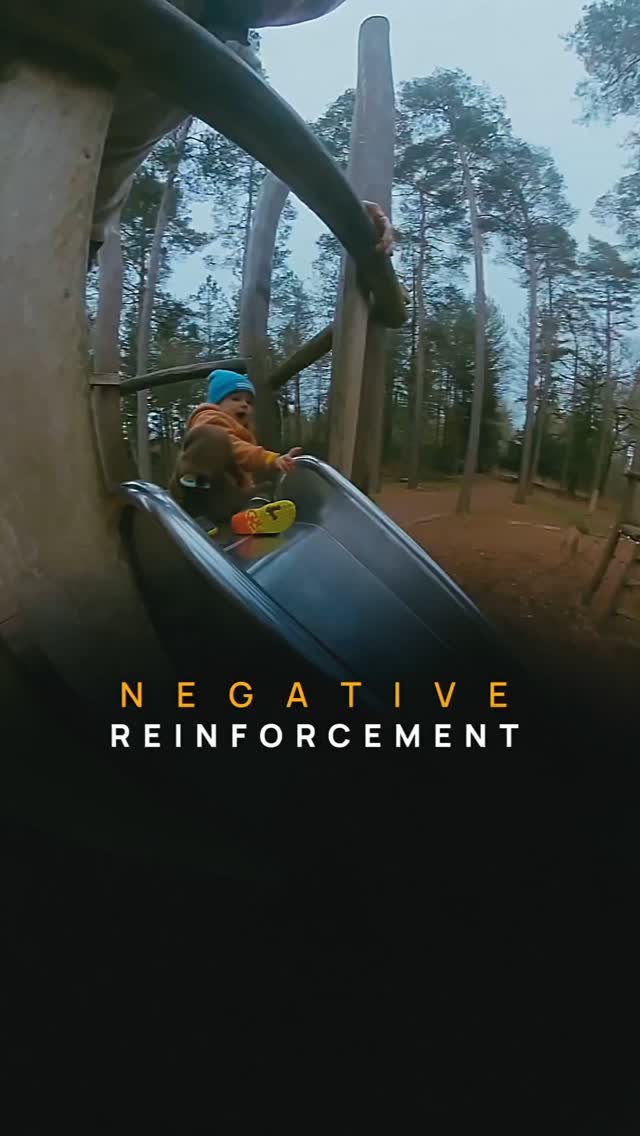


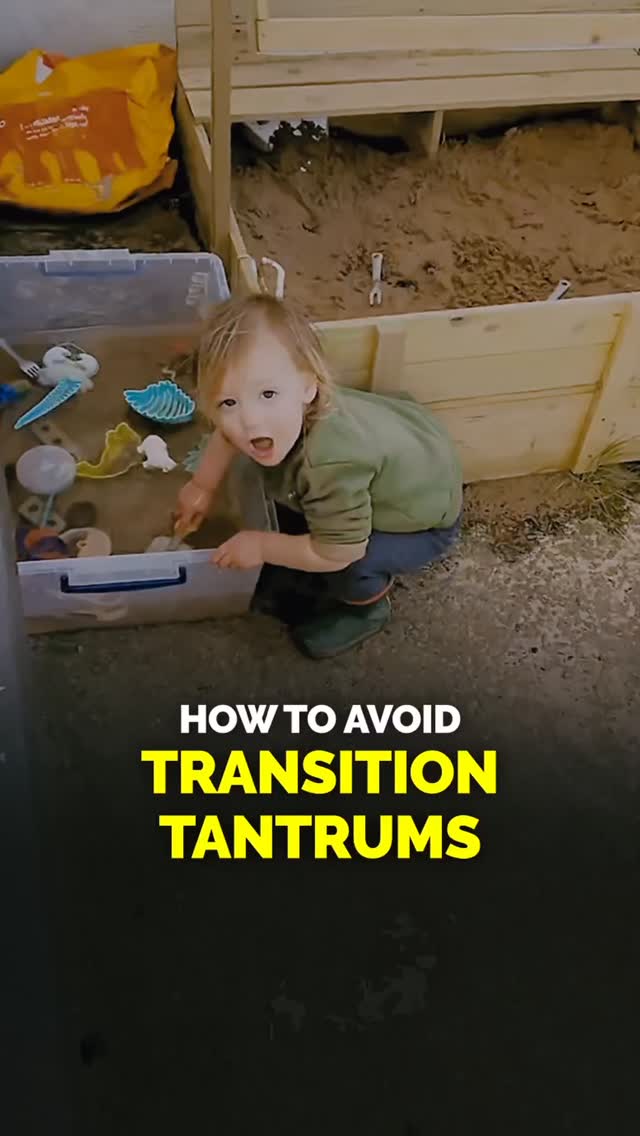
Why Most Tantrum-Taming Approaches Fail. And What Actually Works.
Most parenting advice hands you techniques. Count to ten. Enforce a consequence. Get on their level. Validate their feelings. Stay calm.
It sounds reasonable. Until you're standing in the cereal aisle with a screaming three-year-old and your mind goes completely blank.
The problem isn't that the techniques are wrong. It's that they skip the three things that actually determine whether you can use them.
The Capacity Gap
You can't access what you know when you're running on empty. Most approaches assume you'll be calm enough in the moment to apply their advice, but if your own nervous system is already flooded, no technique will land. Capacity is built before the tantrum, not during it. It's the foundation everything else stands on.
The Clarity Gap
In the heat of a meltdown, most parents are guessing. Is this defiance or exhaustion? A real need or a test of the limit? Am I being too soft or too harsh? Without a clear way to read yourself, your child, and the situation, you end up reacting to the noise instead of responding to what's actually happening. Clarity turns chaos into information you can act on.
The Confidence Gap
Tantrums aren't a single moment. They move through phases. There's the build-up, the peak, the release, the return. Each phase is asking something different of you, and each one has its own cues to read and its own move to make. Most parents don't know this, so they fight the wrong phase. They try to shut down the peak, rush past the release, drop the limit before the return. It feels like failing. It's actually just being lost. Confidence isn't gritting your teeth and hoping it ends soon. It's knowing exactly where you are in the arc, what this moment is asking of you, and what comes next, so you can hold the limit and hold the connection, all the way through.
This is what Tantrum Taming Tactics is built around: closing the Capacity, Clarity, and Confidence gaps. Three shifts that turn tantrums from something that happens to you into something you can actually navigate, with your limits intact and your connection with your child intact.
Six ideas that reframe the whole thing in one sitting.
Tantrums aren't manipulation. They're communication your child doesn't have words for yet.
Your child isn't giving you a hard time. They're having a hard time, and you're the safe place they can finally let it out.
Your child isn't testing your limits. Their brain is testing its own, and you're the wall it gets to push against.
You're not reacting badly. You're reacting from a nervous system nobody taught you to lead from.
You don't need more knowledge. You need more capacity to access the knowledge you already have.
You're not failing. You're navigating a terrain nobody ever drew you a map for.
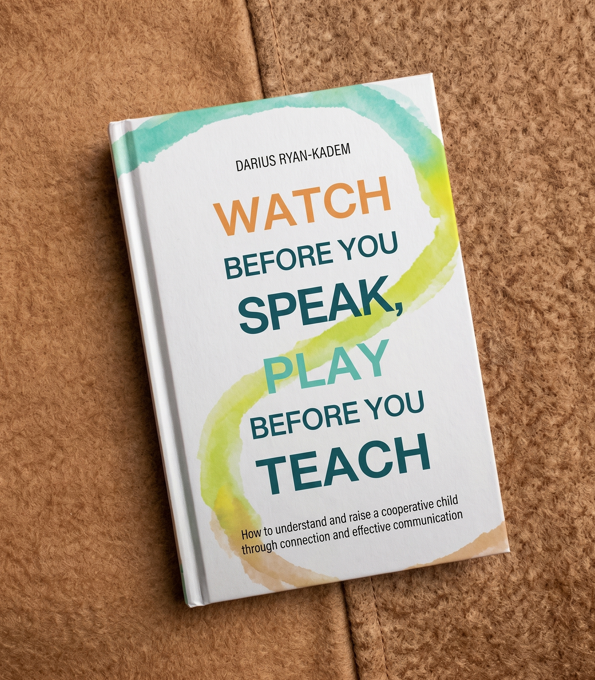
Hosted by the author of Watch Before You Speak, Play Before You Teach.
Darius lays out three core pillars, becoming a keen observer, an effective communicator, and a play facilitator, that together form a connection-first approach to discipline and cooperation.
Drawing on developmental psychology, attachment theory, and neuroscience, the book moves parents away from coercive discipline towards positive discipline.
He shows how play becomes one of the most powerful tools a parent has for building trust, regulation, and cooperation.
He provides a guide to raising a cooperative child by understanding what's really driving their behaviour rather than reacting to the surface of it.

Parenting author and educator. For the loudest years.
Darius Ryan-Kadem works with parents of toddlers and preschoolers, focusing on oppositional behaviour and self-regulation.
What sets his work apart comes down to three things.
First, he takes dense developmental psychology and breaks it down into clear, digestible frameworks with concrete, actionable steps.
Second, he illustrates those frameworks through video content showing real-life examples of what they actually look and sound like in the moment with a real child, something nobody else in this space is doing.
And third, he treats parenting as a holistic practice rather than a one-dimensional fix. One grounded in parental self-awareness, deep attunement, and the reflective habits that turn a chaotic week into something you can actually learn from.
What people are saying:
This is the method that gives you answers to all those 'I don't understand why they're doing this' moments.
From the very first week, I was more cognizant of my emotional state, and was able to interrupt the default pattern.
I became more confident in setting boundaries and much kinder and more understanding during tantrums.
Save your spot. Free.
Drop your email. We'll send you the link, the calendar invite, and short reminders. No spam.
What people usually ask before they sign up.
Do I have to bring my partner?
No. Most of the parents inside the cohort start alone and the other parent comes around within 2 to 3 weeks because they can see it working. Going first is fine.
What if I can't make the live?
This is live only. No replay. If May 14 doesn't work for you, the next cohort is in July. Register your interest and we'll let you know when registration opens.
Is this a pitch for something?
The first 60 minutes are pure teaching. At the end Darius walks through Tantrum Taming Tactics, the live 5-week cohort that teaches the TTT method in full. No pitch in the middle.
My kid might be neurodivergent. Will this still apply?
Yes. The TTT method is built on matching response to state, which works for neurotypical and neurodiverse kids alike. Specialist support sits on top of this, not instead of it.
I've already read all the parenting books. Will this be different?
Yes, because the gap is almost never knowledge. It's sequencing. Most books teach you the right tool and don't teach you when to run it. The TTT method is a sequence, not a script.